



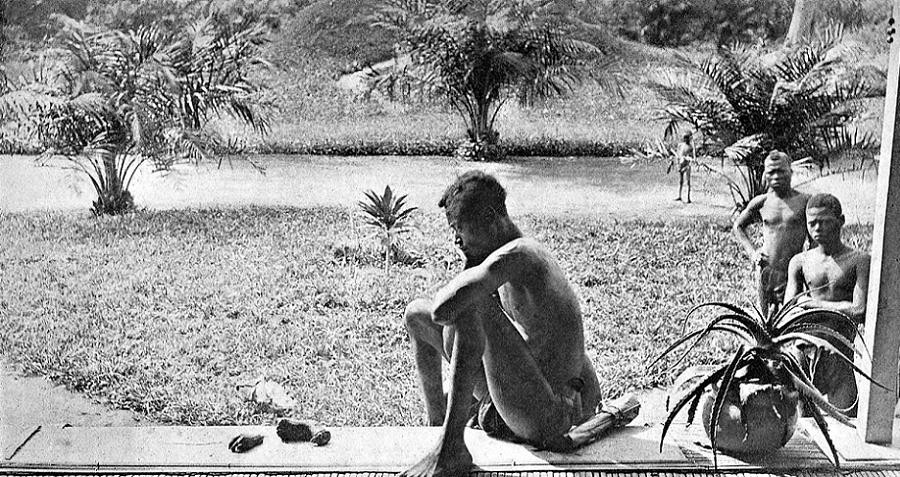

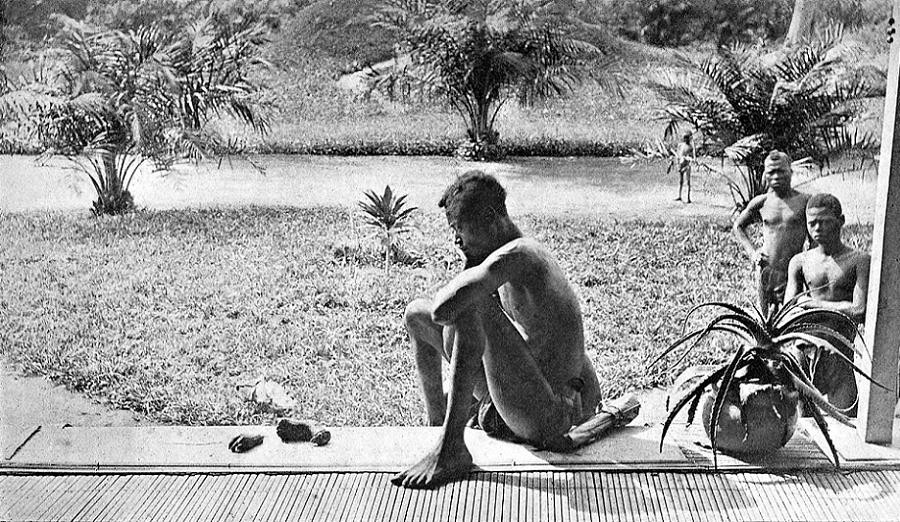
 Nsala of Wala contemplates the severed hand and foot of his five-year-old daughter in 1904.
The king’s appalling system began to take its toll on a scale unheard of since the Mongol rampage across Asia. Nobody knows how many people lived in the Congo Free State in 1885, but the area, which was three times the size of Texas, may have had up to 20 million people before colonization.
At the time of the 1924 census, that figure had fallen to 10 million. Central Africa is so remote, and the terrain is so difficult to travel across, that no other European colonies reported a major refugee influx. The perhaps 10 million people who disappeared in the colony during this time were most likely dead.
No single cause took them all. Instead, the World War I-level mass death was mostly the result of starvation, disease, overwork, infections caused by mutilation, and outright executions of the slow, the rebellious, and the families of fugitives.
Eventually, tales of the nightmare unfolding in the Free State reached the outside world. People railed against the practices in the United States, Britain, and the Netherlands, all of which coincidentally owned large rubber-producing colonies of their own and were thus in competition with Leopold II for profits.
By 1908, Leopold II had no choice but to cede his land to the Belgian government. The government introduced some cosmetic reforms right away – it became technically illegal to randomly kill Congolese civilians, for example, and administrators went from a quota-and-commission system to one in which they received pay only when their terms ended, and then only if their work was judged “satisfactory.” The government also changed the colony’s name to the Belgian Congo.
And that’s about it. Whippings and mutilations continued for years in the Congo, with every penny in profit siphoned out until independence in 1971.







Comments
0 comment