





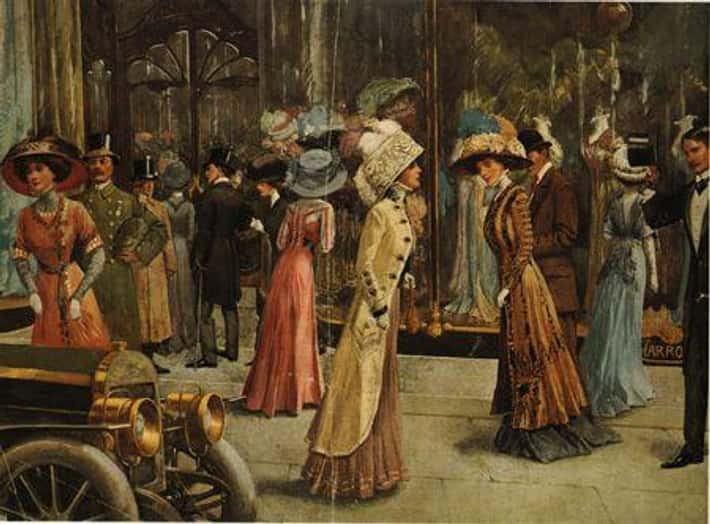
The Legacy of The 40 Elephants
The Forty Elephants have left an enduring mark on London’s criminal history and beyond, affecting the perception of crime, gender roles within it, and making a lasting imprint on pop culture. Throughout their crime spree, they continuously dismissed traditional Victorian gender norms, paving the way for the acknowledgement of women in crime and introducing an entirely novel criminal dynamic.
Arguably, their most significant legacy was their transformation of perceived gender roles in crime. Through their brazen criminal exploits, this all-female gang constructed a powerful counter-narrative to the traditional assumptions of passive and submissive femininity. They were neither mere sidekicks nor victims; they were audacious thieves, leading a network of criminal activity. While these women operated outside societal laws, they ironically compelled society to expand its understanding and acknowledgement of women's capabilities, offering a paradoxical contribution to gender equality.
In the realm of criminality, their activities offered a blueprint of cunning subterfuge, revealing the potential benefits of exploiting societal stereotypes for ill-gotten gains. Some criminal elements may view The Forty Elephants as pioneers, who used their femininity as both a shield from suspicion and a weapon for manipulation. Law enforcement had to adapt their approach and tactics, no longer able to overlook women as potential perpetrators.
Often romanticised in popular culture, myth and reality frequently blur when discussing The Forty Elephants. Their elaborate heists and audacious exploits enthrilled and appalled in equal measure, ensuring their longevity in public memory and cultural representation. They have been immortalised in various forms of media. The Forty Elephants represent a fascination with the aberrant, an all-female gang that both embodied and challenged the gender norms of their time.
However, it is essential to distinguish myth from reality when interpreting their legacy. While their audacious antics continue to captivate cultural and historical imaginations, their actions wrought significant economic damage, disrupted lives, and contributed to social disorder. Their criminal endeavours are not to be romanticised or condoned.
Through their criminal endeavours, The Forty Elephants marvellously encapsulated the tensions between societal norms and the capacity for resistance. They left an indelible mark on London's crime history, and their legacy continues to influence gender perceptions in criminality and popular culture.
Irrevocably, their story nurtures the importance of dismantling gender bias, for greater understanding and societal progress. As a criminological case, they emphasise that criminals are not confined within conventional gendered stereotypes. And in the cultural schema, they serve as a reminder of the potent cocktail of fascination and apprehension that unconventional women in power provoke. The sociological lens cast on The Forty Elephants, therefore, translates into the importance of dialogue on gender roles, crime and societal norms, even in modern-day society.








Comments
0 comment