




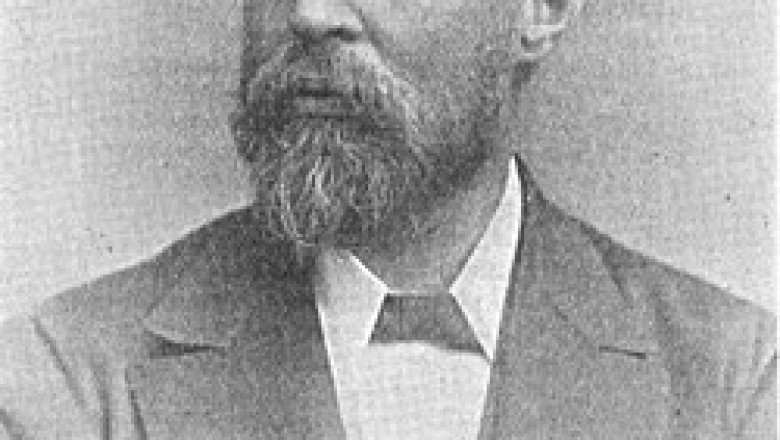
On the morning of October 30, 1858, the residents of Bradford woke to a horror story. Two young boys, Orlando and John Burran, were dead in their home on Jowett Street . Their father, who had given them each a sweet from the market the day before, was gravely ill. Within hours, reports flooded the local police station of sudden, violent sickness across the district—vomiting, convulsions, and in the worst cases, death .
The common thread? Peppermint lozenges. Specifically, the cheap, dark-colored humbugs sold by a market trader known to all as Humbug Willie .
What unfolded over the next few days was one of Victorian Britain’s deadliest mass poisonings—a tragedy born not of malice, but of a dizzying chain of penny-pinching and catastrophic errors.
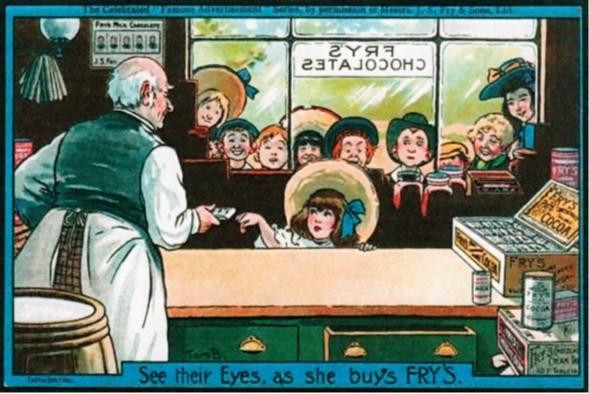
A Cheap Sweet for a Hard City
Victorian Bradford was the wool capital of the world, a booming industrial city where fortunes were made and lives were often brutally short . For the working poor, life was a grind of long hours, cramped housing, and polluted air. Infant mortality was staggering, with roughly half of all children dying before their fifth birthday .
In this grim landscape, small pleasures mattered. Peppermint lozenges—humbugs—were a cheap, popular treat, often sucked to soothe throats irritated by the city’s notorious smog . They were sold by street vendors and market traders like William Hardacre (sometimes spelled Hardaker), a stallholder at the Green Market .
Hardacre, nicknamed “Humbug Willie” or “Billy Humbug,” was a familiar figure. He wasn’t a villain. He was a businessman trying to eke out a living in a competitive market .
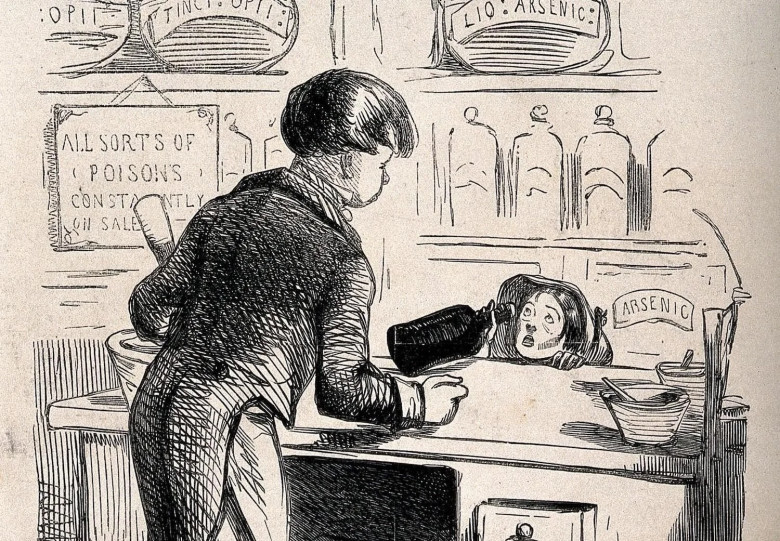
The Chemistry of Cutting Corners
To understand the disaster, you have to understand the economics of Victorian candy. Sugar was expensive. Really expensive. It was taxed, and for the working class, sweets made with pure sugar were a luxury. So confectioners and grocers had a common, legal, and seemingly harmless trick: adulteration.
The most common filler was something called “daft” . Despite the whimsical name, daft was simply a white powder—gypsum, plaster of Paris, or pulverized lime. It was cheap, it was harmless, and it could be mixed into the candy mixture to replace some of the costly sugar without changing the texture too much .
Hardacre got his humbugs from a local confectioner named Joseph Neal, who manufactured cheap sweets from his premises on Stone Street . Neal was a respectable businessman who knew the value of a penny saved. When he needed more daft to bulk out a batch of lozenges, he sent his assistant, John Archer, to a nearby druggist, Charles Hodgson, on Baildon Bridge 0
This is where the dominoes began to fall.

The Fatal Errand
On October 18, 1858, Archer arrived at Hodgson’s shop to collect the gypsum. But Hodgson was sick in bed, suffering from a cold, and had left his shop in the hands of a brand-new apprentice named William Goddard.
Goddard, barely two weeks on the job, had no idea where the daft was stored. He went upstairs to ask his ailing boss, who gave him vague directions to the cellar or backroom.
Downstairs, among barrels of various white powders, Goddard found a cask. It was unlabeled. He pried it open, scooped out twelve pounds of the white powder, and handed it to Archer, who carted it back to Neal’s confectionery works.
It wasn’t daft. It was arsenic trioxide—a deadly poison.
A crucial safety law, the Sales of Arsenic Act, required that arsenic be mixed with a coloring agent—usually soot or indigo—to make it visually distinct from harmless powders. It also mandated proper labeling. In this shop, on this day, those rules were either ignored or the arsenic was stored improperly, sitting in an unmarked cask that looked exactly like the gypsum.
The Deadly Batch
The twelve pounds of arsenic arrived at Joseph Neal’s workshop, where a sweet-maker named James Appleton began preparing a new batch of peppermint lozenges. He mixed forty pounds of sugar, four pounds of gum, peppermint oil, and the twelve pounds of white powder he believed was daft.
Appleton worked with the mixture for six hours. By the time he finished, he was feeling violently ill—vomiting, with strange pains in his limbs. He assumed he’d caught a cold. He went home to bed.
The resulting sweets looked odd. They were darker than usual, a strange, ominous shade. When Humbug Willie came to collect his order, he noticed the difference immediately. He complained to Neal, who blamed a new batch of gum and offered a discount—half a penny per pound off.
Hardacre, ever the frugal trader, accepted. He took the sweets back to his stall in Green Market and put them out for sale on Saturday, October 30.
A Night of Terror
The events of that Saturday and the following Sunday are almost impossible to comprehend. Hardacre sold about five pounds of the lozenges—roughly a thousand individual sweets—to families across Bradford. He sampled his own wares as he sold them, a common practice for market traders to reassure customers. By late afternoon, he began to feel unwell and left his assistant to mind the stall while he went home to bed.
The arsenic content of the candies was staggering. Analysis later revealed that each lozenge contained fourteen to sixteen grains of arsenic. The lethal dose for an adult is considered to be about four to five grains. Each sweet was essentially two to three times a fatal dose.
By Sunday morning, the death toll began to mount. Dr. John Henry Bell, attending the Burran children in Jowett Street, noticed that the father and two other family members were also sick—all had eaten the sweets. He sent samples to Felix Rimmington, the town’s leading chemist, for analysis.
As the day wore on, the scale of the disaster became terrifyingly clear. Police were inundated with reports from every corner of the district. Families who had bought sweets from Humbug Billy’s stall were struck down en masse. The symptoms were unmistakable: violent vomiting, severe abdominal pain, convulsions, and death.
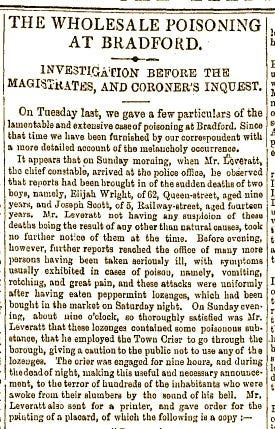
Realizing the danger was still on the streets, police took desperate measures. They went from pub to pub, ringing bells and shouting warnings: “Don’t eat the sweets! They’re poison!”. Warning notices were printed and plastered across the city.
When police arrived at Hardacre’s home, they found him in bed, desperately ill from eating his own stock. He was a victim, not a suspect.
The Reckoning
The final death toll is typically cited as twenty-one, though some accounts say twenty or twenty-five. The youngest victim was just seventeen months old. Over two hundred people were left seriously ill.
The investigation quickly traced the poison back to Hodgson’s pharmacy. When confronted, the druggist was horrified. He checked the cask his apprentice had used and confirmed it contained arsenic.
Hodgson, Goddard, and Neal were all charged with manslaughter. But the wheels of Victorian justice ground slowly, and the prosecution ultimately proved toothless. The charges were dropped, or in Goddard’s case, he was tried and acquitted. The tragedy was officially deemed a case of “accidental negligence” —a series of catastrophic mistakes with no one legally culpable.
The Aftermath and the Legacy
Humbug Willie survived his poisoning, but he was never the same. The arsenic left him partially paralyzed down one side, a permanent reminder of the calamity he had unknowingly unleashed. He continued to run his market stall for several years, a shadow of his former self, dying in 1866 at the age of sixty-one.
Joseph Neal left Bradford by 1863. Charles Hodgson disappeared from the historical record. William Goddard, the apprentice who made the fatal error, vanishes into obscurity—a young man whose single mistake caused a catastrophe.
But the Bradford Poisoning, as it came to be known, was not entirely in vain. The public outcry was immense. Newspapers across the country, including The Times, covered the story in lurid detail. The tragedy became a rallying cry for reform.
In 1860, Parliament passed the Adulteration of Food and Drink Act, the first serious attempt to regulate what went into British food. The Pharmacy Act of 1868 followed, requiring that poisons be properly labeled, recorded, and sold only under strict conditions.
It was too late for the twenty-one who died in Bradford, but the laws changed because of them.
A Grave Discovered
For over 150 years, Humbug Willie’s story was a dark footnote in Bradford’s history. But in 2026, volunteers at Undercliffe Cemetery made an unexpected discovery. While transcribing burial records for the cemetery’s computer database, they found the location of an unmarked grave in the unconsecrated section—plot 106.
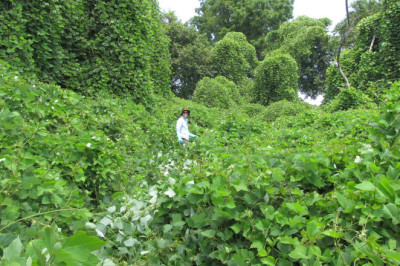
It was the final resting place of William Hardacre, along with four other members of his family. Volunteers cleared decades of brambles and ivy to expose the grave mound. They discovered that two of the poisoning victims were also buried at Undercliffe, as were Dr. John Henry Bell and Felix Rimmington, the men who had identified the arsenic and warned the city.
The charity now plans to erect a headstone—perhaps shaped, in a macabre touch, like a humbug—to commemorate the man at the center of one of Victorian England’s most tragic accidents.
The Sweet That Killed
The Bradford poisoning is a story of small economies leading to monumental disaster. A druggist’s apprentice who didn’t know where the gypsum was kept. A confectioner who didn’t question an unlabeled cask. A sweet-maker who worked with arsenic for six hours and thought his illness was a cold. A market trader who haggled over the price of sweets that looked wrong instead of asking why.
It’s also a story about the precariousness of Victorian life, where the food you ate could kill you because the sugar was too expensive and the poison wasn’t labeled properly. The Bradford humbugs weren’t a murder weapon. They were a symptom of a system that valued profit over safety, and they became the catalyst for change.
So the next time you pop a humbug into your mouth, spare a thought for the people of Bradford in 1858. Their sweets tasted of peppermint and death, and their tragedy built the foundations of the food safety laws we take for granted today.










Comments
0 comment