




Examination of Theories Debunking the Myth
Scientific reason and technological advancements have provided rational explanations for the numerous reports of the Flying Dutchman sightings over the centuries. While these may not entirely extinguish the fascination for the lore, they shed light on some intriguing natural phenomena that could explain this enduring maritime legend.
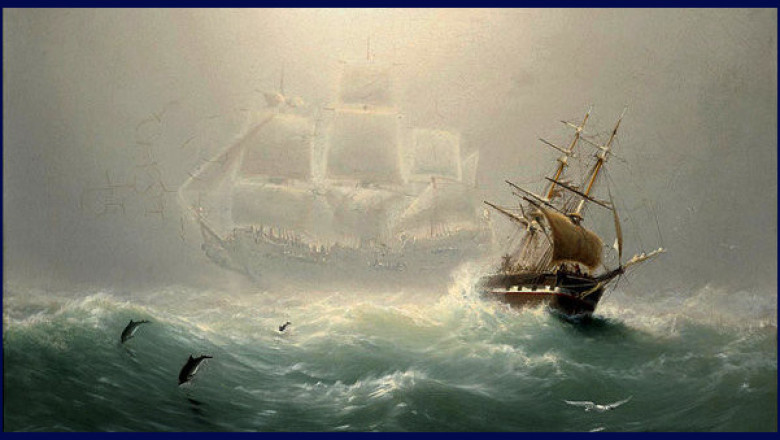
One widely accepted theory is the Fata Morgana – an optical illusion caused by certain climatic conditions. Named after the Arthurian sorceress Morgan le Fay, Fata Morgana is a term used to describe a complex form of mirage that distorts objects over the horizon. Under specific thermal conditions, light bends as it passes through air layers of different temperatures, creating an effect where objects from afar appear larger, closer or seem to be floating above the horizon.
This atmospheric trick could make a normal ship appear as a ghostly vessel due to the distorted and magnified light. Fata Morgana mirages are most common at sea, especially in areas with drastic temperature changes, like the Cape of Good Hope—infamously associated with the Flying Dutchman.
Another plausible explanation is the phenomenon known as bioluminescence. Certain marine organisms, such as dinoflagellates, emit light when disturbed. A ship moving through water filled with these organisms could create an eerie, glowing effect, creating a potentially ghostly image, especially under darkness.
Further explanations dwell upon human psychology and the power of suggestion. Sailors, spending months or even years at sea, may become susceptible to hallucinations due to solitude, exertion, poor nutrition, or even scurvy – a vitamin C deficiency common in seafarers before the 19th century. Combined with the fear of the vast, unpredictable ocean and foreknowledge of maritime legends, this could shape impressions of innocuous sights into visions of the spectral ship.
Over time, the commitment to exacting navigation and the advent of more sophisticated radar and satellite technology have effectively eradicated such sightings. These plausible theories offer a logical explanation to this age-old maritime myth.
Regardless of how much realism one subscribes to, the legend of the Flying Dutchman continues to persist, captivating the imagination with its blend of the mystical and mortal perils inherent to our perennial struggle against nature's relentless elements.












Comments
0 comment