




Historical Accounts
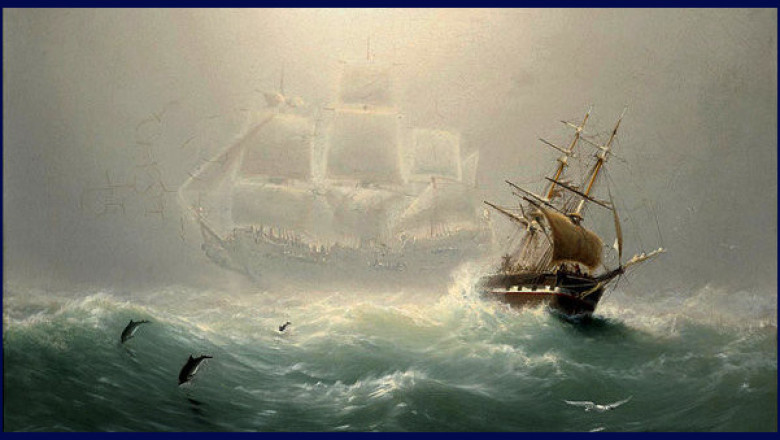
The legend of the Flying Dutchman, the renowned ghost ship, navigates its way beyond folklore's symbolic boundaries, sailing into the realm of historical accounts, sightings, and experiences. From mariners' testimonies to diary entries by acclaimed historical figures and Royal Navy officers, the oral tradition surrounding the myth initially breathed its life into written records.
The phantom ship's earliest literary mention dates back to the late 18th century when John MacDonald, in his book "Travels in Various Parts of Europe, Asia and Africa," recounts an encounter a sailor friend had with the spectral vessel.
The first documented sighting, however, that significantly underpinned the Flying Dutchman's status as a real maritime phenomenon, curiously enough, involves future British monarch, King George V. During his sea voyage to Australia onboard the HMS Bacchante in 1881, the then Prince George, along with other crew members, claimed to have sighted the infamous phantom ship.
According to the ship's log, they witnessed the Flying Dutchman emerge from a shroud of darkness with full and eerie sails, emitting a ghastly glow. Its appearance, contrary to the wind's direction, gave it an uncanny and ghostly semblance. This sighting, followed by the tragic death of a seaman the following day, propagated the narrative surrounding the spectral ship as an omen of doom.
Accounts from other Royal Navy officers over the years, such as Lieutenant James W. Courtney in 1823 and Admiral Sir George Tryon in 1885, added fuel to these enigmatic flames. Their experiences served as material evidence attesting to the phantom ship's supernatural existence and its power to foretell disaster.
Sightings of the Flying Dutchman continued to be reported into the 20th century, ensuring the enduring infamy of this maritime legend. Newspapers and tall tales from sailors painted a picture of a ghostly, terrifying ship sailing forever into the headwind, its spectral image leaving those who saw it shrouded in fear.
Psychologists and scientists have since tried to explain these sightings as optical illusions, hallucinations, or mistaken identities. Despite these rational explanations, many prefer to cling onto the more mystical interpretation, keeping the legend of the Flying Dutchman alive. Regardless, these entries served to sear the myth of the ill-omened vessel into the historical record and public consciousness.

Fata Morgana












Comments
0 comment