




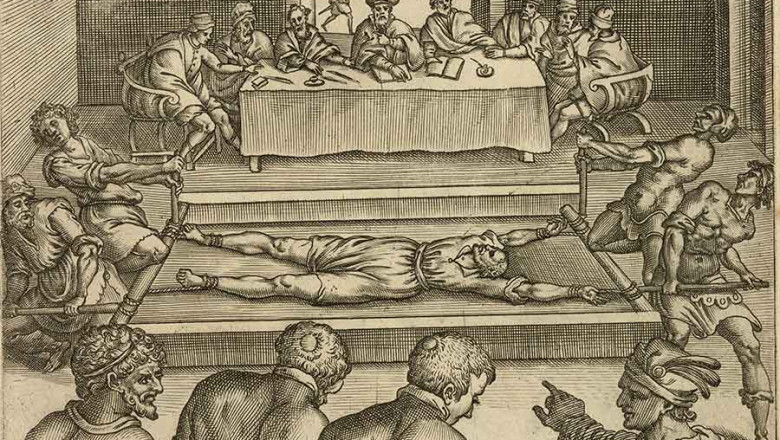
Richard Topcliffe was more than just a name in the shadowy history of Elizabethan England; he was the brutal, unyielding instrument of the Crown’s campaign against Catholicism. While the Queen and her councillors crafted policy, Topcliffe executed it with a ferocity that shocked even his contemporaries. He was not merely an enforcer; he was a specialist in pain, a man who turned persecution into a personal vocation.
The Queen's Personal Servant
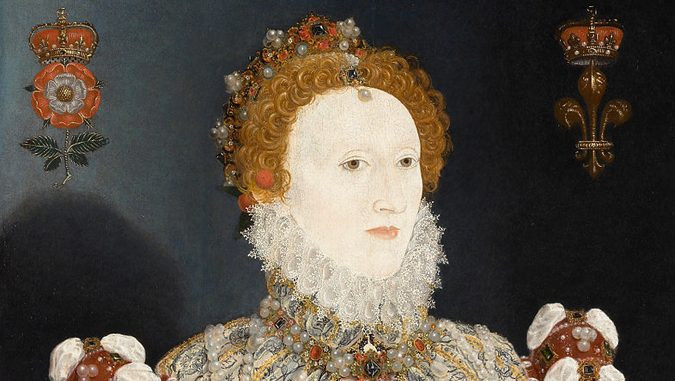
Born in 1531 into a well-connected Lincolnshire family, Topcliffe’s path to infamy began with a calculated self-fashioning. He entered the service of Elizabeth I before her accession, a fact he never tired of reminding her of in letters where he styled himself her "most humble pursuivant". Unlike the professional bureaucrats who served William Cecil, Topcliffe presented himself as the Queen’s personal, self-financed agent. He armed a troop of horsemen at his own expense during the Northern Rebellion of 1569 and considered himself a direct instrument of the royal will.
This self-image was central to his identity. He did not see himself as a mere gaoler or a cog in a machine. He was the Queen's loyal servant, protecting her from the "traitors" he believed were lurking in every recusant household and priest-hole.
The Art of Interrogation
Topcliffe's reputation, however, rests on his methods. He operated in the Tower of London, Bridewell, and, most chillingly, in a private torture chamber he maintained in his own house in Westminster. He was known to boast that his personal instruments and techniques were superior to the official ones sanctioned by the state.
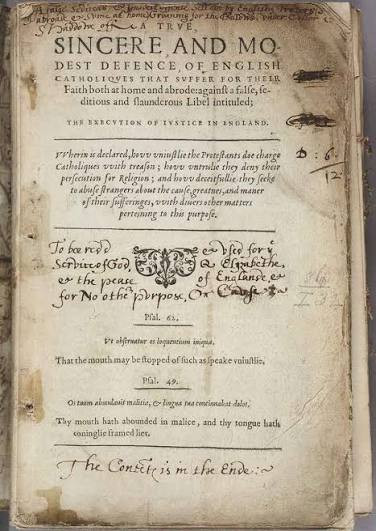
His preferred method was the "manacles" or "gauntlets"—hanging a prisoner by the wrists for hours, sometimes days, a procedure that caused excruciating pain and often permanent injury. Contemporary accounts describe him as a man of "inhuman cruelty," who would "not spare to extend any torture whatsoever". But his brutality was not limited to the physical. He understood that the interrogation of Catholic priests required a forensic approach. Modern scholarship has revealed that Topcliffe was a "professional reader," annotating the confiscated books of his victims with gloating marginalia. His reading was not idle; it was used to map the networks of the Catholic underground and to legitimise the violence he was about to inflict.
His cruelty extended beyond the rack. In a notorious case involving the Jesuit Robert Southwell, Topcliffe exploited the vulnerabilities of a victim’s own family, using psychological manipulation and sexual coercion as
The High Cost of Loyalty
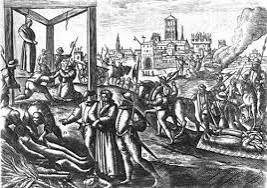
Topcliffe’s career was defined by his pursuit of the Jesuit mission. He captured and tortured Robert Southwell, Henry Walpole, and John Gerard. He was present at their executions, often acting as master of ceremonies, ensuring the full and horrific rigours of the law—hanging, drawing, and quartering—were carried out. In his own mind, he was a patriot, writing to the Queen that he had "helpt more traitors [to Tyburn] than all the noblemen and gentlemen of the court".
Yet, his zeal was also his undoing. His methods made him a liability. In 1595, he became embroiled in a sordid legal dispute with his one-time accomplice, Thomas Fitzherbert, over the spoils of a condemned family. Fitzherbert had betrayed his own father and uncle, expecting to split their estates with Topcliffe. When the victims died before execution—possibly due to Topcliffe's "interrogations"—Fitzherbert refused to pay. The case exposed Topcliffe's methods to the uncomfortable gaze of the courts. His furious, unhinged letters from the Marshalsea prison, where he was briefly committed for contempt, reveal a man who felt betrayed by the very system he had served so brutally.
A Quiet End
Richard Topcliffe died quietly in his bed at Somerby in 1604. It was a remarkably peaceful end for a man who had sent so many to violent deaths. To the end, he remained convinced of his righteousness. He left behind a legacy of terror and a name that, for the Catholic community, became synonymous with the cruelty of the Elizabethan state.
Topcliffe was not a rogue agent or a sadist operating on the fringes. He was the logical extreme of a regime that viewed religious dissent as treason. He was the Queen's enforcer, a man who read books, broke bodies, and slept soundly, believing he was saving England from damnation.
References
Brownlow, Frank. "Richard Topcliffe: Elizabeth's Enforcer and the Representation of Power in King Lear." In Theatre and Religion: Lancastrian Shakespeare, edited by Richard Dutton, Alison Findlay, and Richard Wilson, 161–78. Manchester: Manchester University Press, 2003. A scholarly chapter examining Topcliffe's cultural and political significance.
Jessopp, Augustus. "Richard Topcliffe, the Pursuivant." Notes and Queries, 5th ser., 7 (7 April 1877): 270–71. An early historical note on Topcliffe's role.
Morris, J. Allen. Richard Topcliffe: "A Most Humbell Pursuivant of her Majestie." Charleston, SC: Citadel Monograph Series, 1964. A focused biographical study.
Richardson, William. "Topcliffe, Richard (1531–1604)." In Oxford Dictionary of National Biography. Oxford: Oxford University Press. The standard scholarly reference for Topcliffe's life.
Rowse, A. L. "The Truth about Topcliffe." In Court and Country: Studies in Tudor Social History, 181–210. Athens: University of Georgia Press, 1987. A critical reassessment of Topcliffe's career.
Renaissance English History Podcast: A Show About the Tudors. Richard Topcliffe. November 3, 2025. A 14-minute episode covering Topcliffe's rise, torture methods, the Anne Bellamy affair, and his legacy as Elizabeth I's chief interrogator. Available on YouTube and major podcast platforms.
Richard Topcliffe: Elizabeth I’s Ruthless Torturer Who Hunted England’s Priests
Richard Topcliffe The Worst Royal Executioner Hollywood Ignored











Comments
0 comment