




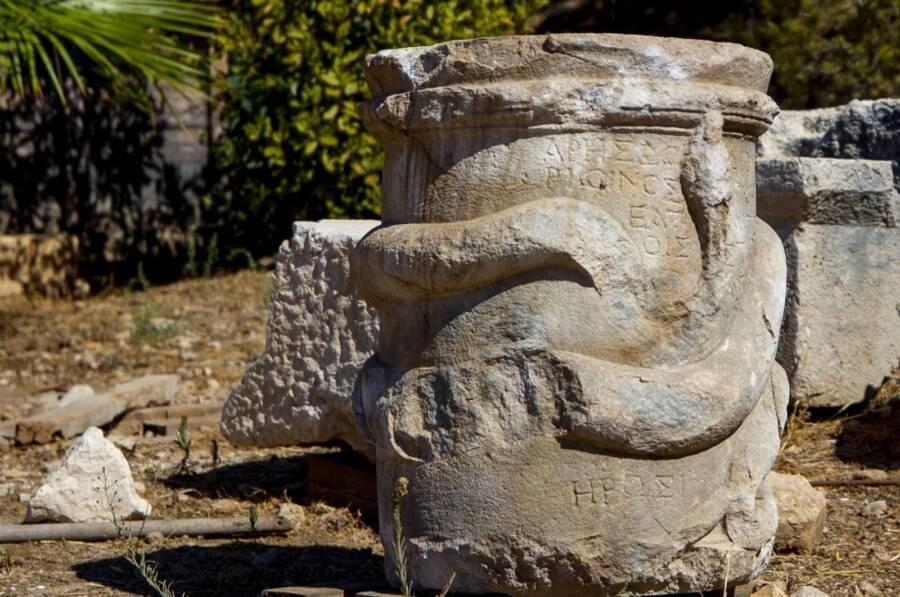
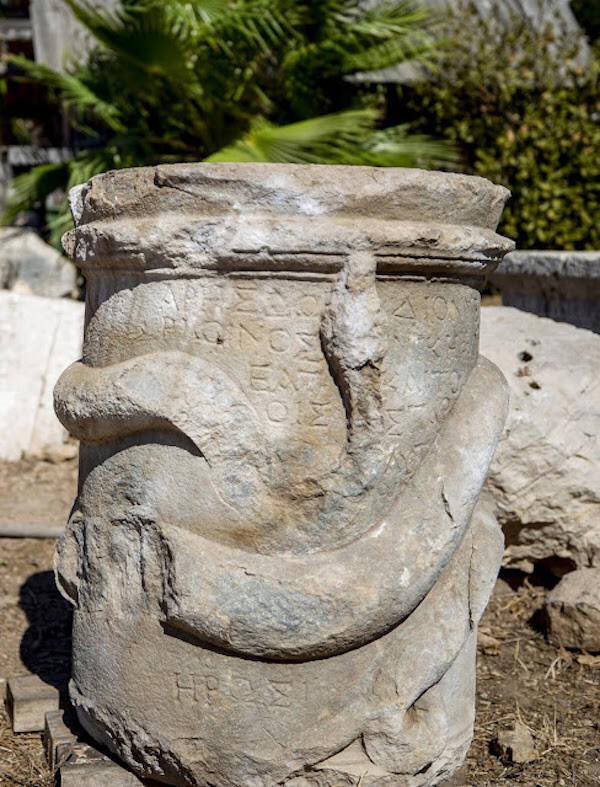
 The Greek inscriptions on the artifact have yet to be publicly translated.
Koçak added that the altar likely demonstrates the relationship between the people of Patara and the outside world.
The Turkish archaeology team uncovered the Greek snake altar during excavations near the Roman walls and baths of Patara. Inhabited by the Luwian-speaking Anatolians in the Bronze Age, Patara also served as the main port and trading center of Lycia, a historical region, and is believed to be the birthplace of Saint Nicholas, himself.
According to Ancient Origins, the find has been shedding invaluable light on the rituals and religions of the Graeco-Roman world. That era, which spans from 332 B.C. to 395 A.D., saw both ancient Greek and Roman influences on the cultures, governments, and religions surrounding the Mediterranean and Black Seas.






Comments
0 comment