




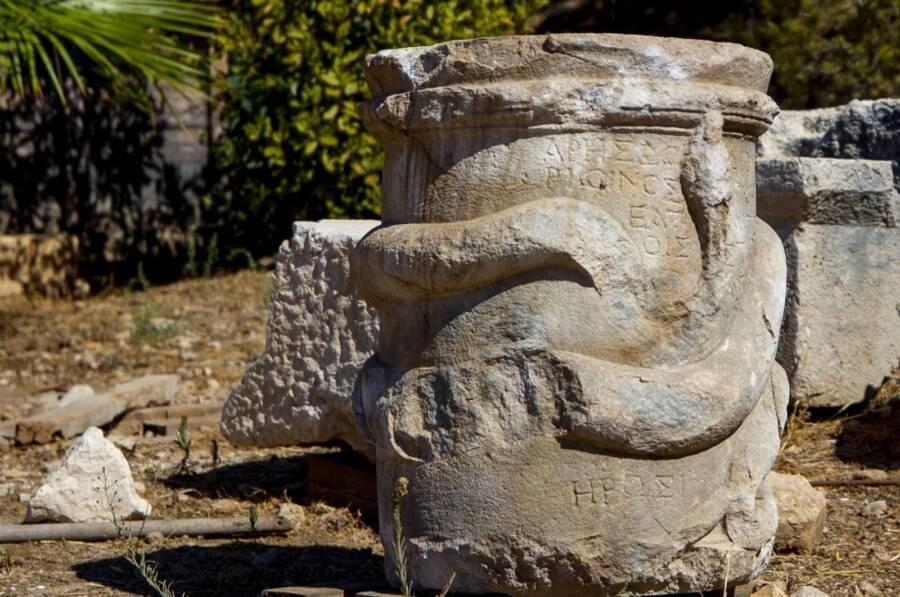
 The monument is the first discovery of its kind in the area.
The snake altar has been officially dated back to when the city was under Roman rule, and researchers are confident that it is tied to the religious worship of underground gods associated with agriculture. It’s currently posited that offerings like food were made at the altar and that it was perhaps also used for funerary rites, as the underground gods were also believed to rule over the dead.
Carved out of marble, the cylindrical artifact is in pristine condition. The snake was carved to coil upwards around the altar, with Greek letters engraved beside its serpentine body. Mustafa Koçak, an academic at the Department of Archaeology at Antalya Bilim University and vice president of the excavation team, explained that the ancient residents were familiar with snakes, but that the local species are “very harmless.”
Koçak added that Patara was polytheistic during the time in which this altar was made, and it allowed for a wide range of religious worship. This particular altar is therefore believed to have served as an agricultural totem.
The archaeologist also proffered his theory that foodstuffs were left at the shrine, and “made on this altar to calm the underground gods.” These appeasements likely consisted of various breads and meats, with a punishing belief that unsatisfied gods could cause environmental disasters.
“They brought liquid or food such as bread and meat and put them on the altar,” Koçak said. “This is actually an item from the funerary culture of ancient people. Similar altars were also found in some ancient cities in southwestern Muğla province, but we have never encountered such an example in Patara.”







Comments
0 comment