





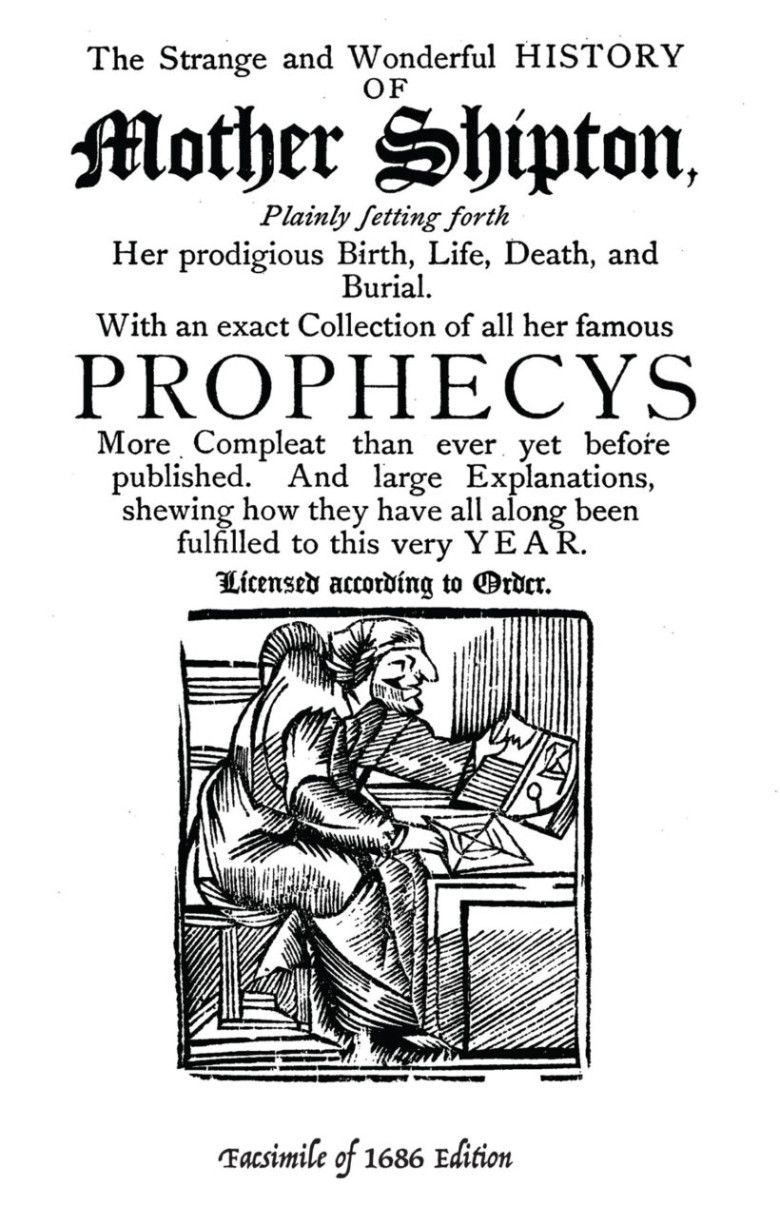
The Main Prophecies
"The world to an end shall come
In eighteen hundred and eighty one."
This is one of the most famous prophecies, though it obviously did not come true, leading to suggestions that it was garbled in transmission or symbolic rather than literal.
"Around the world men's thoughts will fly,
Quick as the twinkling of an eye."
This seems to foretell the invention of the telegraph or the internet.
"And water shall yet more wonders do,
Now strange, yet shall be true."
This could be interpreted as a prediction of uses for water in technologies such as hydroelectric power.
"In water, iron then shall float
As easy as a wooden boat."
This seems to predict the advent of iron ships.
"Beneath a tree an hidden well
Shall tell at York of viel's knell."
Sometimes associated with a well beneath a tree at York where she was born.
"Carriages without horses shall go,
And accidents fill the world with woe."
This has been interpreted by many as a prediction of cars and subsequent car accidents.
"For in those wondrous far-off days,
The women shall adopt a craze
To dress like men, and trousers wear
And to cut off their locks of hair."
Seemingly a prediction of changing roles and fashions.
"Water shall come in England yet
More marvelously than Fleet or Strand,
From Woman the Heart; and from the Neck a Hand."
This could refer to some significant event related to water. Fleet and Strand refer to areas in London which have been historically associated with significant water bodies - the River Fleet and the Strand which lies on the River Thames. Some interpret this line as predicting a significant flood or the discovery of a new water source. The last line of the prophecy is even more mysterious. It could metaphorically mean that women (From Woman the Heart) will have a significant role in this event or change due to their emotional intelligence or caregiving nature (the Heart). The phrase "from the Neck a Hand" is more cryptic. It could suggest someone 'sticking their neck out', or taking a risk or leading the way, and that this action is important (a Hand).
"Beneath the water, men shall walk, Shall ride, shall sleep, shall talk."
Submarines
"A house of glass shall come to pass
In England – but alas, God help us!
A war will follow with the work
Where dwells the pagan and Turk."
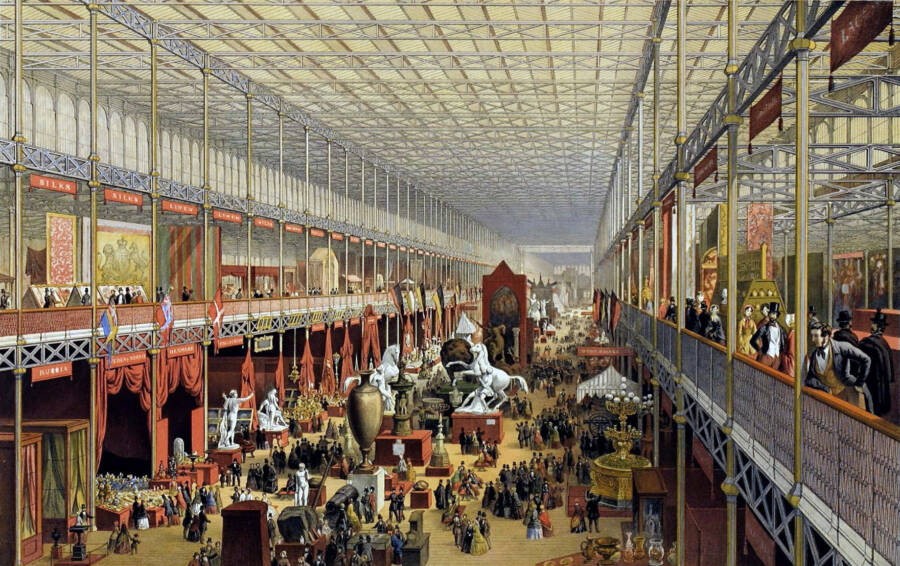
This could be seen by some as a reference to the Crystal Palace in London, which was a massive glass and iron structure built for the Great Exhibition in 1851. This suggests a war will occur following the construction of the aforementioned 'glass house'. This could be interpreted as the Crimean War (1853-1856), which happened a few years after the construction of the Crystal Palace. The Crimean War involved the Ottoman Empire, which predominantly consisted of Turkish people, and was a conflict with religious aspects - Christianity versus Islam (the latter religion sometimes being referred to as 'pagan' in a derogatory way during older times).
"In iron times, in a leaden age, True love shall be turned to rage, And new diseases fly in rage."
The phrase "In iron times, in a leaden age" could symbolize a period of hardness and heaviness, perhaps filled with challenges and hardships. The second line "True love shall be turned to rage" could refer to conflicts causing divisions among loved ones or possibly interpersonal conflicts escalating within societies. This could be interpreted as a decline of empathy and compassion and the rise of animosity during tough times." And new diseases fly in rage" in the context of today could be interpreted as the outbreak of new diseases and pandemics, like COVID-19. However, given that these prophecies were supposedly made centuries ago, it could refer to any number of diseases or illnesses that were new and significant at different points in history, like the Spanish flu or even HIV/AIDS.
"Three times shall lovely France be led
To play a bloody warlike game:
Before the people shall be free,
Three tyrant rulers shall she see."
This could refer to three significant military conflicts or wars involving France. Depending on the interpretation, this could refer to the French Revolution, Napoleonic Wars, or the two World Wars. "Before the people shall be free, Three tyrant rulers shall she see": This line suggests that before the people of France achieve freedom or stability, they will be ruled by three tyrannical rulers. This could potentially refer to Louis XVI during the French Revolution, Napoleon Bonaparte during the French Empire, and possibly Philippe Pétain during the Vichy France regime in World War II.








Comments
0 comment