





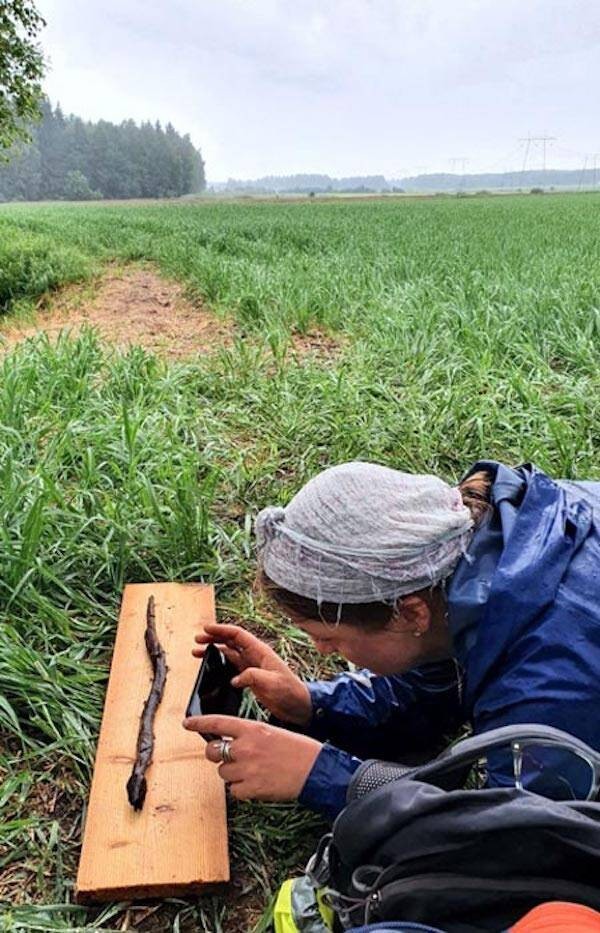
 Satu KoivistoThe team hopes to unearth more artifacts like this before climate change ruins their chances.
Fortunately for the experts, the item was “lost, discarded or intentionally deposited” in soil that protected it from corrosion for the last 4,400 years. While Koivisto has warned his peers that climate change will soon ruin any chance of finding more artifacts like this, some are skeptical of the find, as a whole.
“A skeptic might wonder whether the sinuous shape was deliberate, or an accidental result of four millennia of waterlogging,” said Durham University archaeologist Peter Rowley-Conwy. “I have worked on various bog sites with preserved wood, and wood fragments can be considerably distorted.”
Ultimately, it appears there’s only one surefire way to ascertain what Koivisto and Lahelma have found. Namely, combing the entire archaeological site for anything and everything trapped within its soil. While this race against time is sure to yield some more fascinating discoveries, the snake staff will have to do for now.
“I have seen many extraordinary things in my work as a wetland archaeologist, but the discovery of this figurine made me utterly speechless and gave me the shivers,” said Koivisto. “Personally I do not like living snakes, but after this discovery I have started to like them.”












Comments
0 comment