



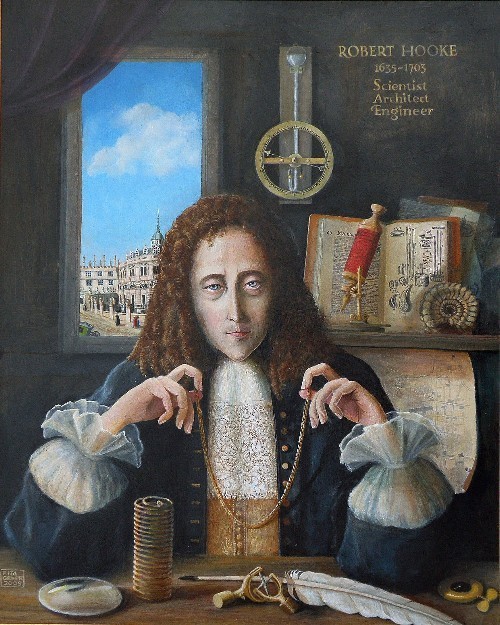

Conflict with Newton and Controversy
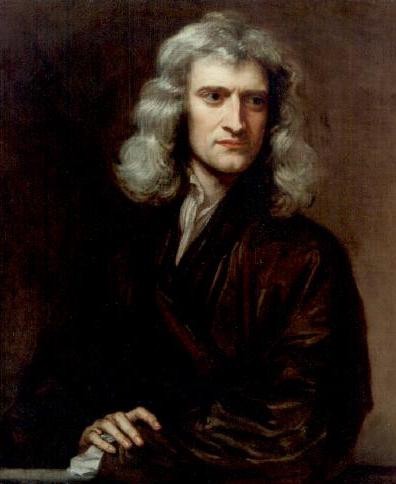 Issac Newton (By Godfrey Kneller/Public domain)
These are just some of Hooke’s contributions to science and biology, but it would not be his work that would ultimately lead to his erasing from history, but rather how his work fitted within Isaac Newton’s.
Newton was the scientific titan of his day, and one of only a few people who could claim the title of ‘greatest scientist of all time’. Unfortunately, he was also a horrific egomaniac and an incredibly petty man. He built his theories on the work and speculation of many men who came before him, but none of his contemporaries could escape the shadow of his genius — or his vanity.
Hooke’s work in astronomy and the discovery of diffraction (the phenomenon of light bending around corners) led him into direct conflict with Newton when he felt he wasn’t being given enough credit for his contributions. Some have even suggested that the popular quote “if I have seen further it is by standing on the shoulders of giants,” which is often attributed to Newton, is a dig at Hooke, who was supposedly a short, hunched man, but it remains unclear whether this quote is actually from an earlier letter sent by Newton to Hooke before the two men had any quarrel.
In 1703, after the death of Hooke and the ascension of Newton to the Presidency of the Royal Society, the legacy of the great scientist started to be tarnished almost immediately. He was reported as ill-tempered, vain, petty, and worst of all as a thief, stealing the ideas of better men. Some of this may have been accurate, but it’s hard to know the truth. Hooke kept his position at the Royal Society for 40 years and was a brilliant scientist: much like Newton, he likely had a titanic ego, but much of the additional speculation about his character is now thought to be an exaggeration — a great deal of which can be attributed to Isaac Newton himself — and was likely an attempt to downplay the importance of Hooke’s contribution to his own work.
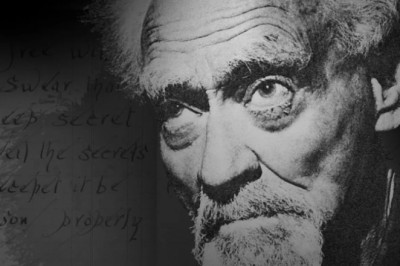
Newton felt so threatened by Hooke he reportedly removed (or intentionally lost) the only confirmed portrait of Hooke from the Royal Society. For centuries, Hooke was largely a reviled laughingstock, but when his diary surfaced in the 20th century, his contributions to the dozens of fields he worked in finally came to light.
Ironically, Newton’s insistence on erasing Hooke’s work from history has led to a renaissance of works on him. Numerous biographies have been written over the years and artist Rita Greer has tracked down the only surviving accounts of Hooke’s appearance and has created over a dozen portraits of him for various museums and institutions.
While we like to imagine scientists as beacons of logic and reason, they are just as vulnerable to jealously and vanity as the rest of us, perhaps even more so. Much of what’s said about Hooke’s personality may be wrong, but what is true is that he was a genius in many fields and a renaissance man out of his time. Our world today certainly wouldn’t be the same without the work of Robert Hooke and it’s time he took his place amongst the scientific giants of history.
Written by Danny Kane






Comments
0 comment