



Humble Beginnings
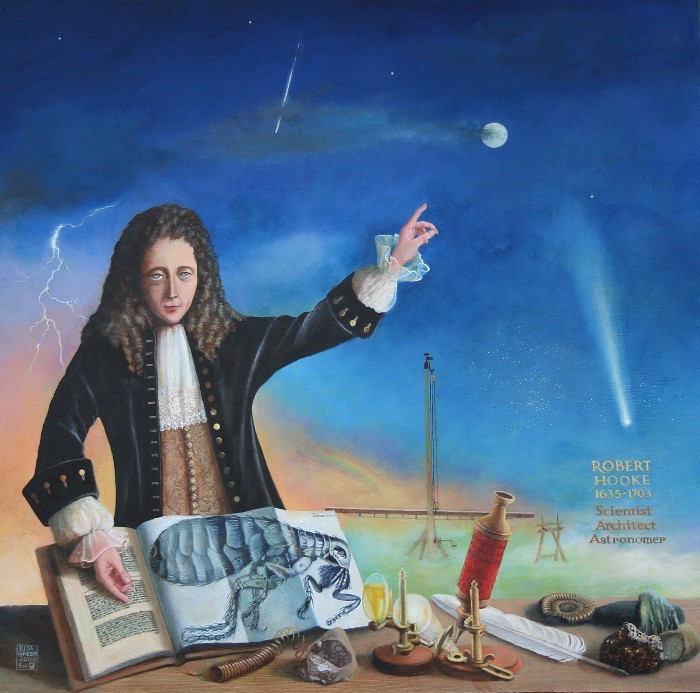
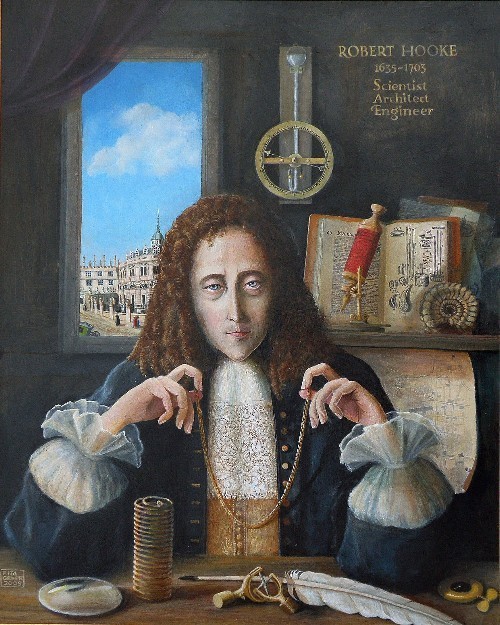
Born into a middle-class family on the Isle of Wight on July 28th, 1635, young Robert Hooke was a sickly child, frequently kept out of school. His father, an Anglican curate, encouraged Robert’s passion for drawing detailed diagrams and designs. He died in 1648, when Robert was just 13 years old, but bequeathed him £40 (a substantial sum at the time).
Through this inheritance, his intellect, as well as numerous scholarships and bursaries, Hooke was able to enroll at the prestigious Westminster School in London, before moving onto Christ Church, at the University of Oxford.
Opinions remain divided on the attitudes of the Puritans under Oliver Cromwell towards the sciences, but it would not be until 1662, after the Stewart Restoration, that Robert Hooke would achieve the position of ‘curator of experiments’ at the newly formed Royal Society. The Royal Society has the distinction of being the oldest independent scientific institution in the world and was founded with the scientific method in mind, under the motto ‘Nullius in verba’ or ‘take nobody’s word for it’. The newly restored King Charles II of England quickly gave the society his approval and it was from here Robert Hooke would make many of his most important discoveries.





Comments
0 comment