



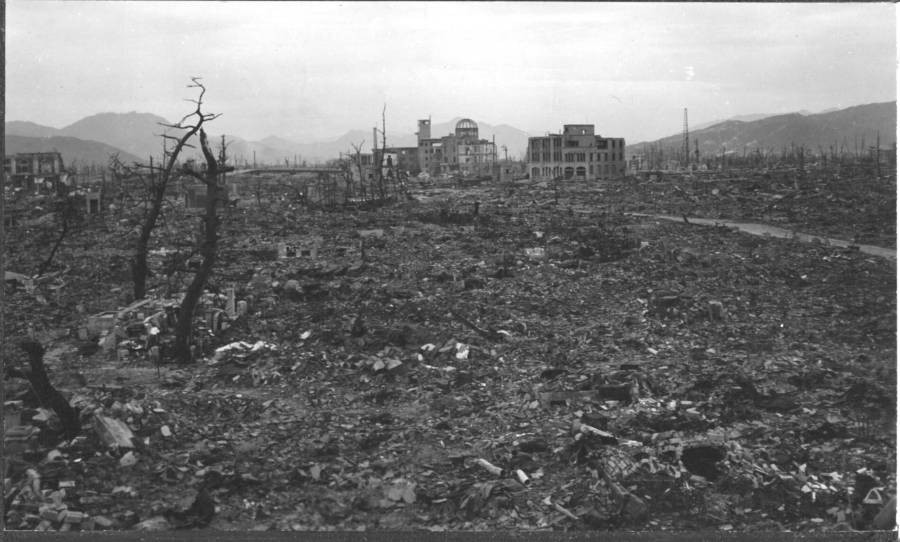

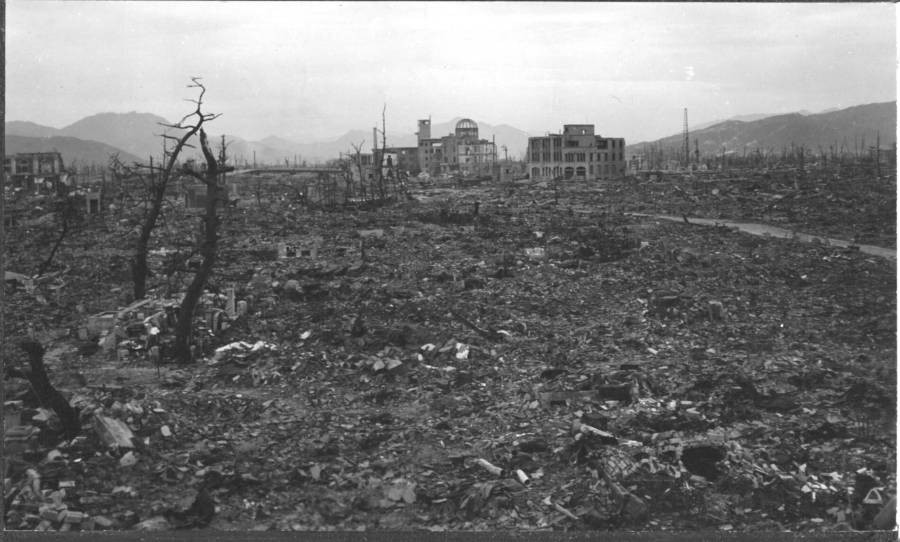
Atom Bomb Aftermath (1945-1946)
Because the residents had been given an all-clear after the earlier air-raid warning, many were outside when the bomb detonated. More than 50 percent of the casualties died from burns while many others who did not succumb to the initial blast or the fires in the immediate Hiroshima aftermath later died of radiation exposure. Survivors recalled near-lifeless, scorched bodies wandering the streets for a few seconds before they fell to the ground and died.
eanwhile, because ground zero happened to be above a hospital, many of the city's doctors and nurses were killed or injured in the blast. The city was thrown into chaos as those still alive scrambled to create makeshift hospitals to aid the wounded.
As the weeks progressed, citizens began to feel the effects of radiation poisoning and a misinformed public believed this condition to be contagious. As a result, those who were suffering with radiation poisoning were ostracized from their communities.
The United States had little aid to offer. Scientists on the Manhattan Project, which created the atomic bombs, claimed to know little about the biological effects of nuclear fallout. Even the deputy medical director at one of the project's laborites admitted that, "The idea was to explode the damned thing... We weren't terribly concerned with the radiation."
Just three days later, the approximate 200,000 residents of Nagasaki were subjected to a much larger bomb, "Fat Man," as it detonated over their city and wiped out 60,000 people instantly.









Comments
0 comment