





Title: Christian Spurling and the Legacy of the Loch Ness Hoax
Loch Ness, the infamous lake lodged in the Scottish Highlands, warrants a grand and mystical tale with an undeniable mysterious allure. The depth and darkness of this large body of freshwater are famed for being the dwelling of an elusive creature, known globally as the Loch Ness Monster, or 'Nessie'. However, the roots of this tale are far from supernatural and are woven intricately with the handiwork of a daring prankster, Christian Spurling.
Christian Spurling, the instigator of this mythological enigma, was not initially a significant character in the narrative of the Loch Ness Monster. Born in 1896, Spurling led an ordinary life as a sculptor and model maker. The significant turning point which would alter his life trajectory occurred when he was in his 60s, as he was drawn into a plan concocted by his father-in-law, Marmaduke Wetherell, a big-game hunter with an ambitious, if not audacious, spirit.
In 1933, the Daily Mail commissioned Wetherell to uncover the truth about the Loch Ness Monster, a growing sensation with public imagination fuelled by numerous reports of sightings. Wetherell eagerly anticipated the challenge; however, his initial venture was far from fruitful. In an ironic twist of fate, the naturalist's grandiose dreams of unveiling the elusive creature unfolded as a public humiliation. He mistakenly dubbed an identified set of footprints as those of Nessie, only for experts at the Natural History Museum in London to reveal they belonged to a hippopotamus.
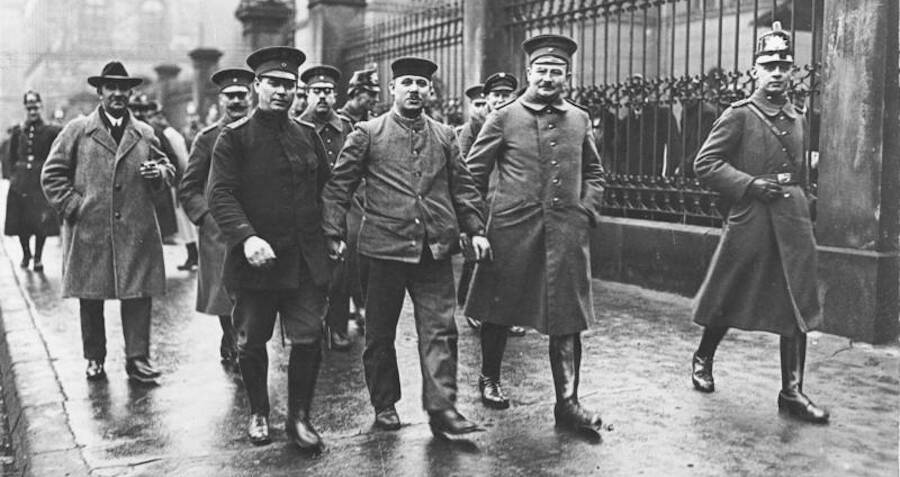
Christian Spurling

The public debasement was a blow to Wetherell's pride, and he yearned for retribution. His desire for revenge took shape in one of the most infamous hoaxes in history, with Spurling as his unsuspecting accomplice.
Borrowing from Spurling's expertise as a model-maker, the duo constructed a model inspired by a blend of the Plesiosaurus's anatomy and the common depictions of sea serpents. Spurling's rendition was a preparing ground for the hoax. His craftsmanship resulted in a convincing model, a replica devised from plastic wood and painted to mimic the earthy tones of the loch's aquatic environment.
The model, attached to a toy submarine as a buoyancy device, was then photographed against the backdrop of the loch, an instance captured by Robert Kenneth Wilson. Wilson was chosen due to his established reputation as a prominent London gynaecologist, and his image, known as "The Surgeon's Photograph”, brought an air of credibility to the evidence. Wilson's reluctance to take credit for the photo further shrouded the truth in a veil of secrecy, amplifying the mystery surrounding Nessie's existence.
Wilson presented this photograph in 1934, and it became the cornerstone of the myth, surviving for nearly six decades as the 'undeniable evidence' of the Loch Ness Monster. It was not until 1994, when Spurling, then aged 90 and nearing the end of his life, finally revealed the truth about the orchestrated hoax.
The confession may have debunked the fascination surrounding the Loch Ness Monster, but it failed to quench the public's thirst for myths and legends. Even today, despite numerous scientific explorations and the lack of concrete evidence, Nessie continues to fascinate audiences worldwide, sustaining the tourism industry around the Loch Ness region.
The peculiar appeal of the Loch Ness Monster thrives on the blurred line between reality and legend. The tale spun by Spurling and his accomplices underscores the power of stories, as they fuel the imagination and provide a refuge from reality. As opposed to diminishing the charm of the tale, the revelation of the hoax contributes to its folklore status. Faced with the everyday banality of reality, many still choose to embrace the thrill of a convincing myth. Spurling's role in creating this enduring legend offers a fascinating study of the human interest in the unknown and an insight into the intrigue behind one of the world's most famous hoaxes.
References
- Naish, Darren. "Hunting Monsters: Cryptozoology and the Reality Behind the Myths." London: Arcturus Publishing, 2016.
- Campbell, Steuart. "The Loch Ness Monster: The Evidence." New York: Prometheus Books, 1986.
- Boyd, Martin and Bright, Roland. "Nessie – The Surgeon’s Photograph Exposed." London: Martin & Boyd, 2012.
The Real Story Behind the Loch Ness Monster | History
The Surgeon's Hoax: was the original Loch Ness sighting a hoax?







Comments
0 comment