




The Legend and Origin
The tale of the Flying Dutchman stretches back several centuries, the narrative woven into seafaring folklore with each retelling. The origin of the myth is as murky as the proverbial waters it haunts; with some accounts suggesting it may stem from the 17th century – the golden age of the Dutch maritime exploration.
To understand the birth of the ‘Flying Dutchman’, one must remember the seafaring capabilities of the time. The Dutch were leading in their maritime exploits, exploring and colonising various parts of the globe. Yet, the sea, shrouded in its mystery, was a treacherous place, often claiming many a life through its capricious nature. This led to the conception of numerous nautical tales and superstitions among sailors.
The Flying Dutchman is said to originate from one such tale of a Dutch East India Company ship, destined never to make port, cursed to sail 'the seven seas' for all eternity, due to hubris or divine punishment. Several narratives have described the causes of such damnation, ranging from a pact with the devil to the ship's captain's abhorrent act of murder or blasphemy.
One popular version attributes the Flying Dutchman's origin to a vessel captained by a man named Hendrick van der Decken, or Barend Fokke, depending on the version. The sheer speed of Fokke's voyages from the Netherlands to Java had led to rumours that he was in league with the devil himself. This pact bestowed his ship with great speeds, leading to the epithet ‘Flying Dutchman’.
In some versions, Captain Van der Decken challenged the wrath of a violent storm off the Cape of Good Hope, refusing to seek shelter. According to the tale, he swore he would round the Cape if it took him till Doomsday, infuriating God with his arrogance. Consequently, he and his ship were condemned to do just that.
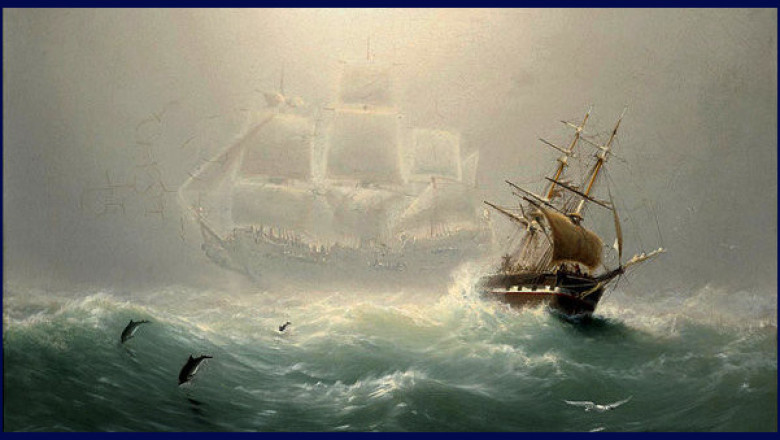
Despite these diverse accounts, one common thread weaves through all renditions of the legend. The Flying Dutchman is invariably a spectral ship, bound to sail the world's oceans for eternity, unable to make port. Its ghostly image has been spotted by sailors over the years, its appearance, often deemed an ill omen, striking fear into their hearts. The very curse that befell it makes it unable to communicate with the land, another aspect commonly found across all versions of the myth.
The legend of the Flying Dutchman embodies hubris's dangers – portraying the man versus nature theme, often depicting the former's overconfidence leading to their downfall.
The allure of the Flying Dutchman remains entrenched within seafaring lore, symbolising the eternal struggle against the power of nature personified by the vast and unpredictable sea. Sailors and seafarers, having faced the same tempestuous elements, keep these tales alive. The also represent the lingering respect for the sea's strength and authority, untamed since the beginning of time, captured in the form of the never-ending voyage of the Flying Dutchman. [DONE]












Comments
0 comment