





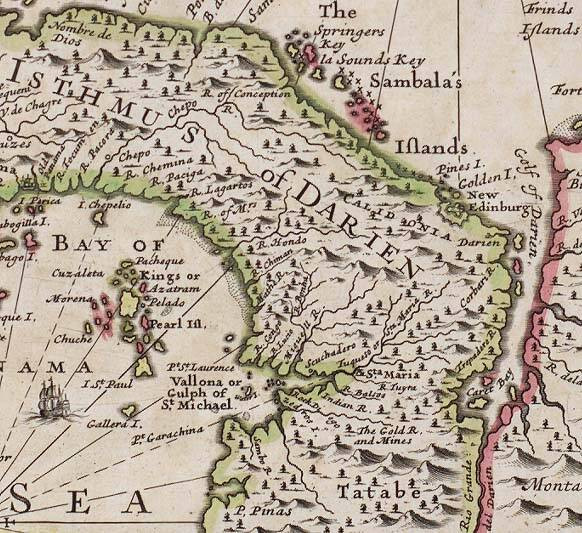
 With the Pacific on one side and the Atlantic on the other, the site of “New Caledonia” was chosen as a supposedly ideal place for a Scottish colony.
Paterson and the settlers planned to build a robust outpost, forge alliances with the local Indigenous peoples, fend off Spanish colonists in the area, and usher in a new era of prosperity and wealth for Scotland.
But their high hopes were almost immediately dashed. The food that they’d brought along had rotted, the crops that they’d planted failed to grow properly in a new environment, and the settlers were soon struck with disease. Hundreds died, including Paterson’s wife and child.
Many of the colonists who survived these setbacks were forced to live on less than one pound of flour per week — and it was moldy. One man wrote, “When boiled with a little water, without anything else, big maggots and worms must be skimmed off the top.”
Much to the surprise of the settlers, the local Indigenous population had no interest in trading with them. And the Scots soon found out that England had forbidden all English ships and colonies from trading with or supplying the new Scottish settlement. They also learned that nearby Spanish colonists were plotting a devastating attack on New Caledonia.
Cut off from potential allies and helpless to defend themselves, the surviving settlers decided to abandon the colony, barely escaping in July 1699. Of the original 1,200 settlers, only 300 of them came back to Scotland alive.








Comments
0 comment