





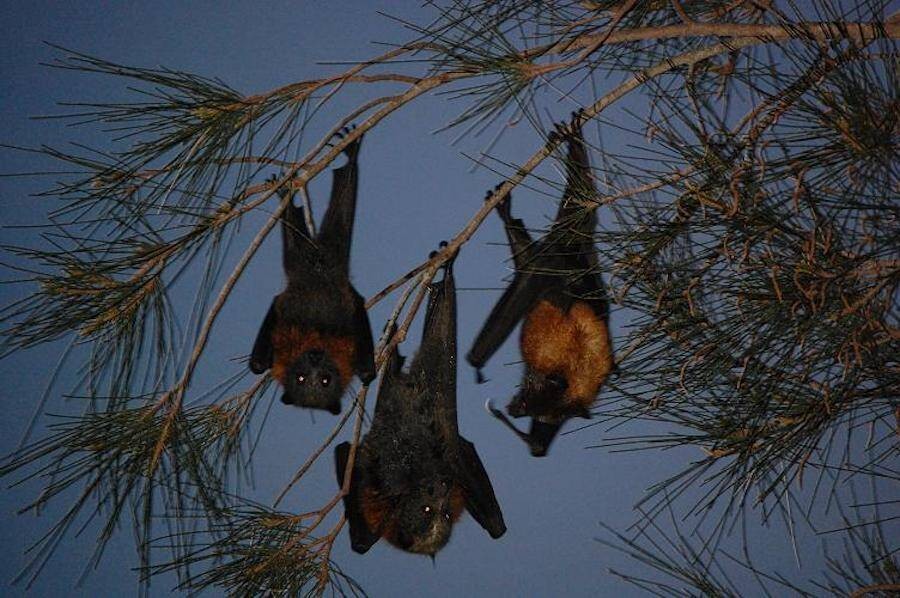
The flying fox’s fruit-based diet helps propagate more of the plants they feed on. After eating, the flying fox redistributes fig seeds in its feces all over the forest, helping new fig trees to sprout.
Unfortunately, while the world’s biggest bat works tirelessly on reforestation, its two-legged enemy below works twice as hard at deforestation.
There are 79 bat species listed in the Philippines, of which 26 are megabats. As the largest bat in the world, the giant golden-crowned flying fox naturally trumps them all in terms of size.
Its genus includes four other megabat species in Southeast Asia, though it’s the only one spread across the Philippines. Unfortunately, their primary threats are all too common these days — deforestation and poaching for profit.
When left alone, this bat doesn’t shy away from human activity. They can be commonly found in forests near populated villages or towns, provided the laws against hunting them are adhered to and industrial activity is minimal. There’s no shortage of photos taken of these slumbering animals, perched along roads or comfortably dwelling on resort grounds.
On the other hand, disturbance and high hunting activity sees these animals retreat to thickly wooded forests to roost on inaccessible slopes more than 3,000 feet above sea level. Overall, the creature doesn’t mind roosting with other flying fox species, mainly the large flying fox.











Comments
0 comment