



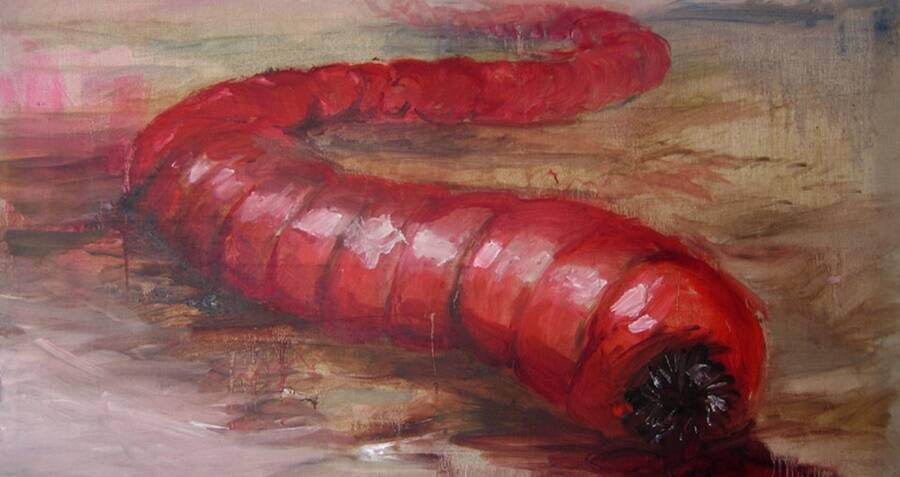

The Mongolian Death Worm
Scientists dismiss cryptids like the chupacabra and the yeti as urban legends due to lack of scientific evidence.
But there is a possibility that such a creature like the Mongolian death worm might exist — after all, even Jane Goodall, one of the foremost primate experts in the world, said she was open to the possibility of bigfoot.
The Gobi Desert is a vast region that spans a territory of 500,000 square miles of rough terrain, making the existence of undiscovered animal species very likely.
Additionally, there are worm species that have been known to live in sand instead of soil, like the giant beach worm (Australonuphis teres) in Australia.
Moreover, in worms the circulatory system functions by absorbing oxygen through their skin and carrying it through their body, which would allow them to grow up to large sizes like the death worm’s purported five-foot length.
Yet, nobody has been able to capture photographic proof of the Mongolian death worm. So how did the legend come to be?
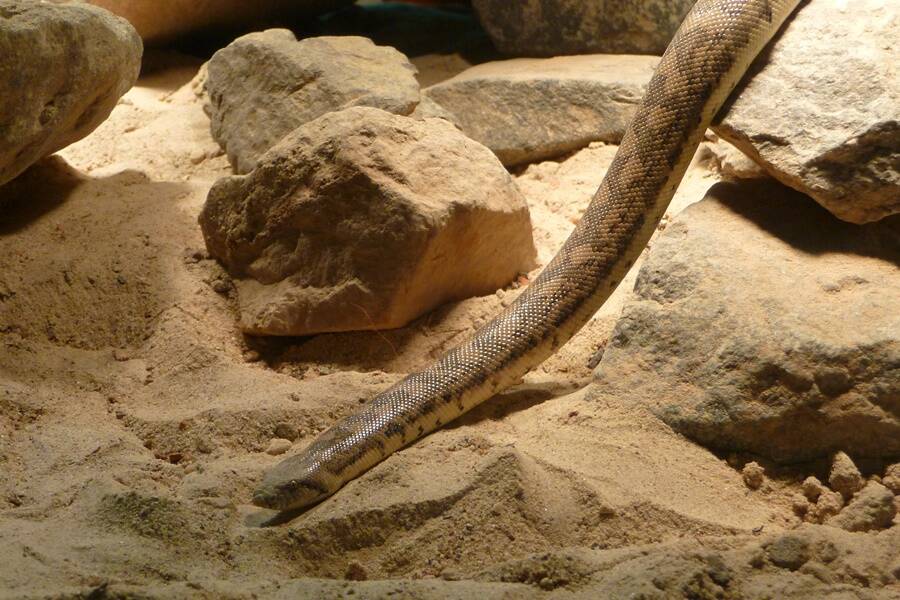
There are a few explanations that could be at play. The first theory is these accounts might actually be true but, like most stories passed orally for generations, they have become greatly exaggerated.
The English translation of “death worm” from its original Mongolian name is also misleading, and experts believe that if such a creature exists it may be a type of reptile, not a soft, wriggly worm.
Either the worm lizard, which looks like a large limbless worm that burrows underground and grows up to several feet, or a type of sand boa snake could have originally inspired the death worm lore.
No matter how the legend of the death worm began, cryptid researchers have not given up hope that someday they will unearth it.







Comments
0 comment